
-
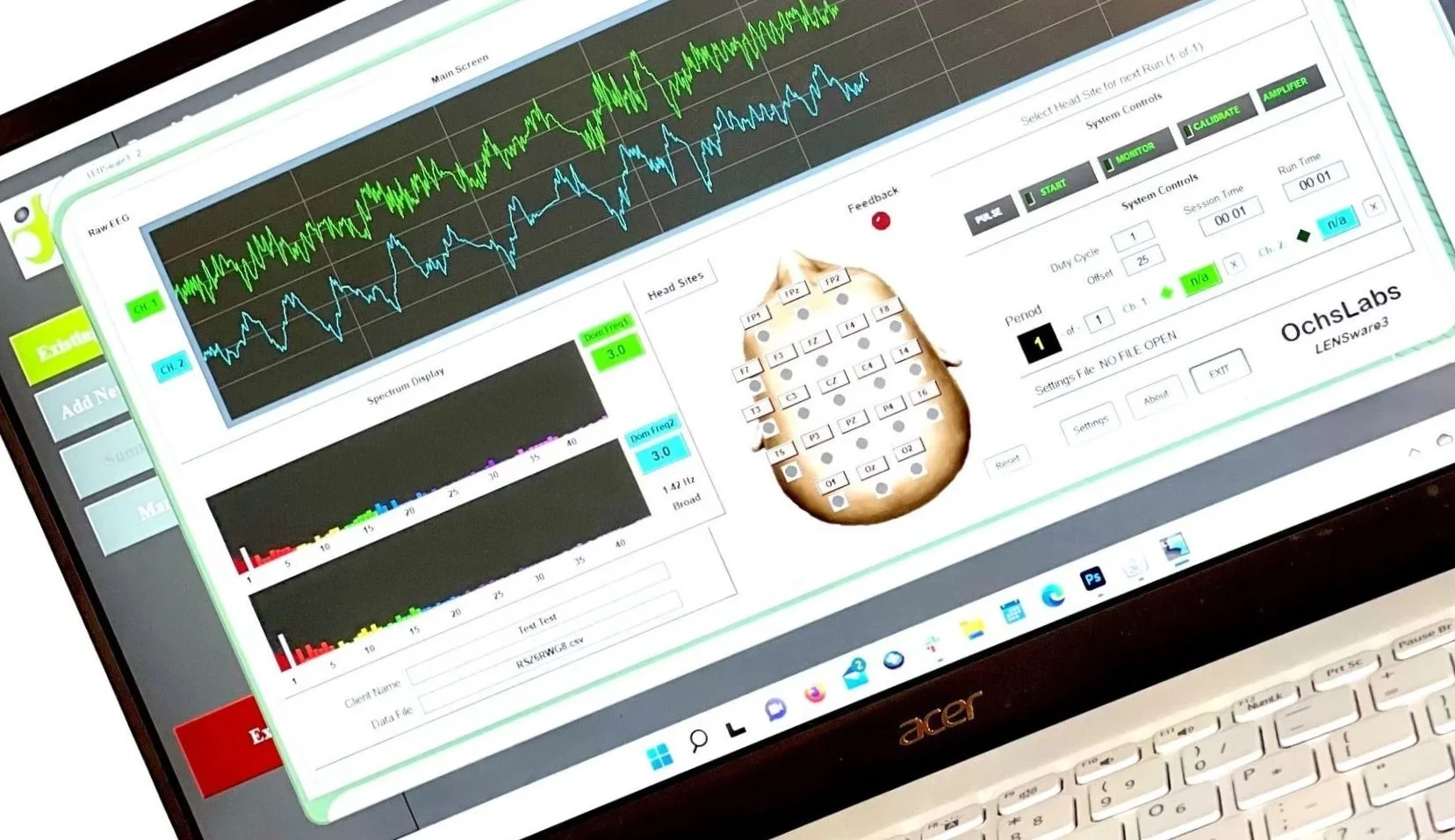
LENS Neurofeedback, or the Low Energy Neurofeedback System, is a gentle, non-invasive form of neurofeedback designed to support the central nervous system in becoming more flexible, regulated, and resilient.
LENS uses very brief, low-intensity electromagnetic feedback that is uniquely matched to the client’s brainwave activity. The client does not need to “do” anything during the session. There are no exercises to perform, no mental tasks to complete, and no need to consciously control brain activity.
For children and teens, LENS may support improvements in emotional regulation, attention, sleep, stress tolerance, and day-to-day functioning at home, school, and in relationships. For adults, LENS may help with clearer thinking, nervous system regulation, stress resilience, mood stability, and a greater sense of internal balance.
As a family therapist, I often view symptoms not simply as “problems to fix,” but as signs that the nervous system may be overwhelmed, stuck, or struggling to adapt. LENS can be a helpful tool for supporting regulation at the nervous system level, which may make therapy, relationships, learning, and daily life feel more manageable.
LENS has helped hundreds of people, just like you, find their way back to a happier and more productive life without the use of drugs. -
LENS Neurofeedback may be helpful for children, teens, adults, parents, and families experiencing challenges related to nervous system dysregulation.
This may include individuals who struggle with:
Anxiety
Depression
ADHD
PTSD or trauma-related symptoms
Grief
Autism spectrum-related challenges
Emotional or behavioral dysregulation
Anger and reactivity
Obsessive-compulsive symptoms
Stress
Sleep difficulties
Mood swings
Concentration difficulties
Learning challenges
Migraines
Post-concussion symptoms
Traumatic brain injury
Tourette syndrome or tics
Addiction-related challenges
Eating disorder-related symptoms
Cognitive difficulties
And other nervous system-related concerns
LENS does not replace medical care, psychiatric care, or therapy when those supports are needed. Instead, it can be used as part of a broader care plan to support regulation, resilience, and overall functioning.
-
Traditional neurofeedback often involves training the brain over time through visual or auditory feedback. Clients may be asked to watch a screen, play a game, focus, relax, or attempt to shift their brainwave activity in a particular direction.
LENS is different.
With LENS, the client does not have to concentrate, practice a skill, or consciously change anything. The process is passive and typically very brief. This can make it especially helpful for children, teens, or adults who may have difficulty sitting still, focusing for long periods, or engaging with more traditional forms of neurofeedback.
Many clients appreciate that LENS is simple, efficient, and does not require effort during the session.
-
LENS Neurofeedback is designed to support the brain and central nervous system in functioning with greater ease and flexibility. When the nervous system becomes more regulated, clients may experience changes in how they think, feel, relate, sleep, focus, and respond to stress.
Possible benefits may include:
Improved emotional regulation
Better focus and attention
Greater stress tolerance
Improved sleep
Fewer meltdowns or shutdowns
Reduced reactivity
Clearer thinking
Improved mood stability
Greater ease in relationships
Increased ability to engage in therapy
More resilience in daily life
For children and teens, these changes may show up as fewer emotional outbursts, improved school functioning, better transitions, more flexibility, or a greater ability to communicate what they are feeling.
For adults, changes may include feeling less overwhelmed, more grounded, more focused, or better able to respond rather than react.
Every nervous system is different, so each person’s response to LENS is unique. Some people notice changes quickly, while others experience more gradual shifts over time.
-
LENS can be used either on its own or alongside therapy.
When used as a standalone service, LENS focuses on supporting nervous system regulation. This may help clients feel calmer, clearer, more emotionally balanced, and better able to manage daily life.
When combined with therapy, LENS may help support the therapeutic process by helping the nervous system become more settled and receptive. For some clients, this can make it easier to access insight, tolerate difficult emotions, communicate more clearly, and integrate the work being done in therapy.
For families, LENS can also support the work of therapy by helping reduce reactivity and increasing each person’s capacity for connection, flexibility, and repair.
LENS does not replace the relational work of therapy, but it may help create a stronger foundation for that work to take root.
-
Because I work through a family systems lens, I understand that one person’s nervous system affects the whole family. When a child is struggling, parents often feel overwhelmed too. When a parent is stressed or dysregulated, children may feel it. Families are deeply interconnected.
LENS Neurofeedback can be a helpful tool for supporting regulation within the individual, while therapy helps support communication, connection, boundaries, repair, and emotional understanding within the family system.
Together, these approaches can help families move toward more calm, clarity, and connection.